Visit Bear Paw Battlefield
On October 5, 1877, after 1,100 miles and just 40 miles from Canada, the Nez Perce laid down their arms at Bear Paw. A self-guided trail winds through the site where this final chapter of the Flight unfolded.
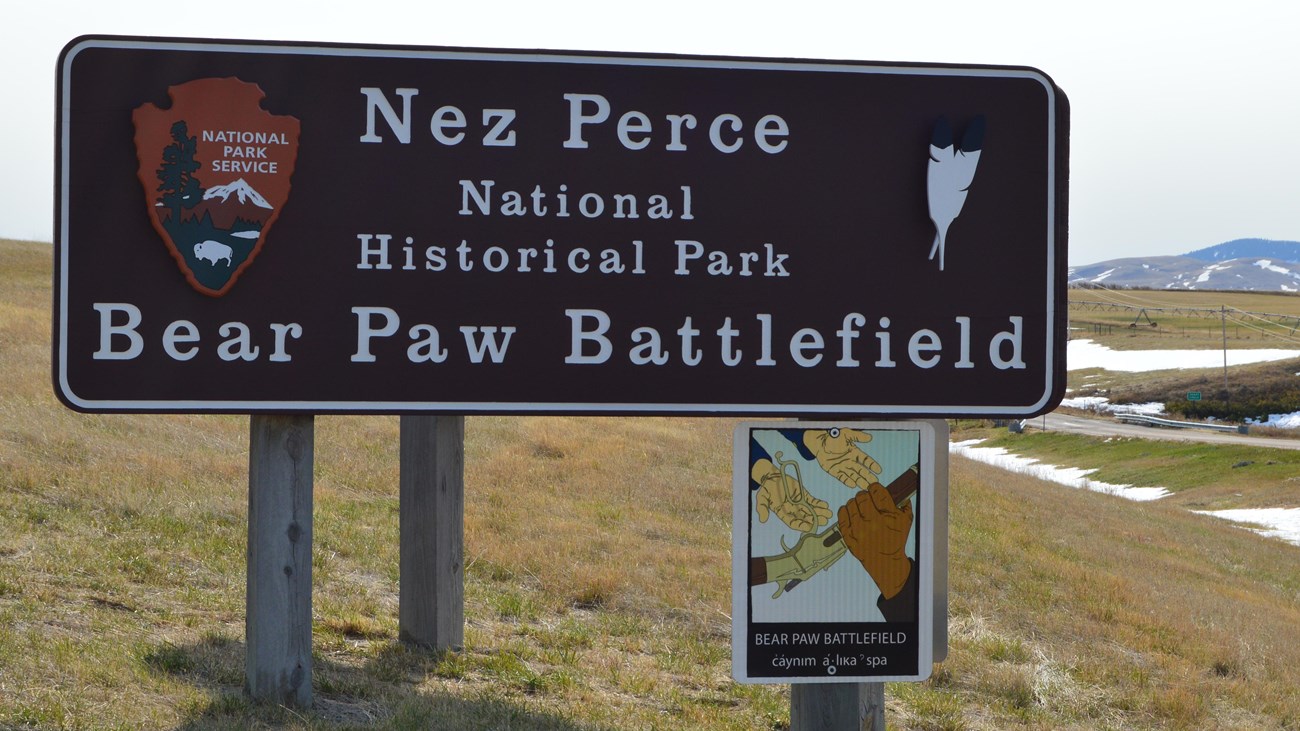
Getting There
Bear Paw Battlefield is located 16 miles south of Chinook, Montana on Route 240 (Cleveland Road). The battlefield is situated on the open northern Montana grasslands.
From Shelby, Montana on I-15, take US Highway 2 east for 123 miles to Chinook. Turn south on Cleveland Road/Route 240 and drive 16 miles to the site. From Great Falls on I-15, take Highway 87 northeast to Havre, then US 2 east to Chinook.
What You'll See
A self-guided interpretive trail, about 1.25 miles of moderate difficulty, winds through the battlefield. You'll find an interpretive shelter, picnic tables, and vault toilets on site. The trail brochure is available for download or pickup and provides context for what you're seeing on the landscape.
Rangers are available Wednesdays through Sundays during summer months for guided tours in the morning. Please call ahead to check the schedule. The Blaine County Museum in Chinook, 16 miles north, offers the film "40 Miles to Freedom" and additional resources about the battle and siege.
Hours & Season
The battlefield is open daily from sunrise to sunset year-round. Winter roads are not maintained, so plan accordingly.
Respecting Sacred Ground
The burial sites at Bear Paw are sacred to the Nez Perce people. Please stay on trails, as the exact locations of all graves are not known and the entire battlefield is treated as sacred ground. Leave any offerings left by Nez Perce families undisturbed, and pay your respects between dawn and dusk.