Lolo Trail and Pass History
For centuries, the trail over the Bitterroot Mountains known as K'useyneisskit — the road to the buffalo — was a path of life and sustenance for the nimíipuu. In July 1877, it became a trail of flight, conflict, and sorrow.
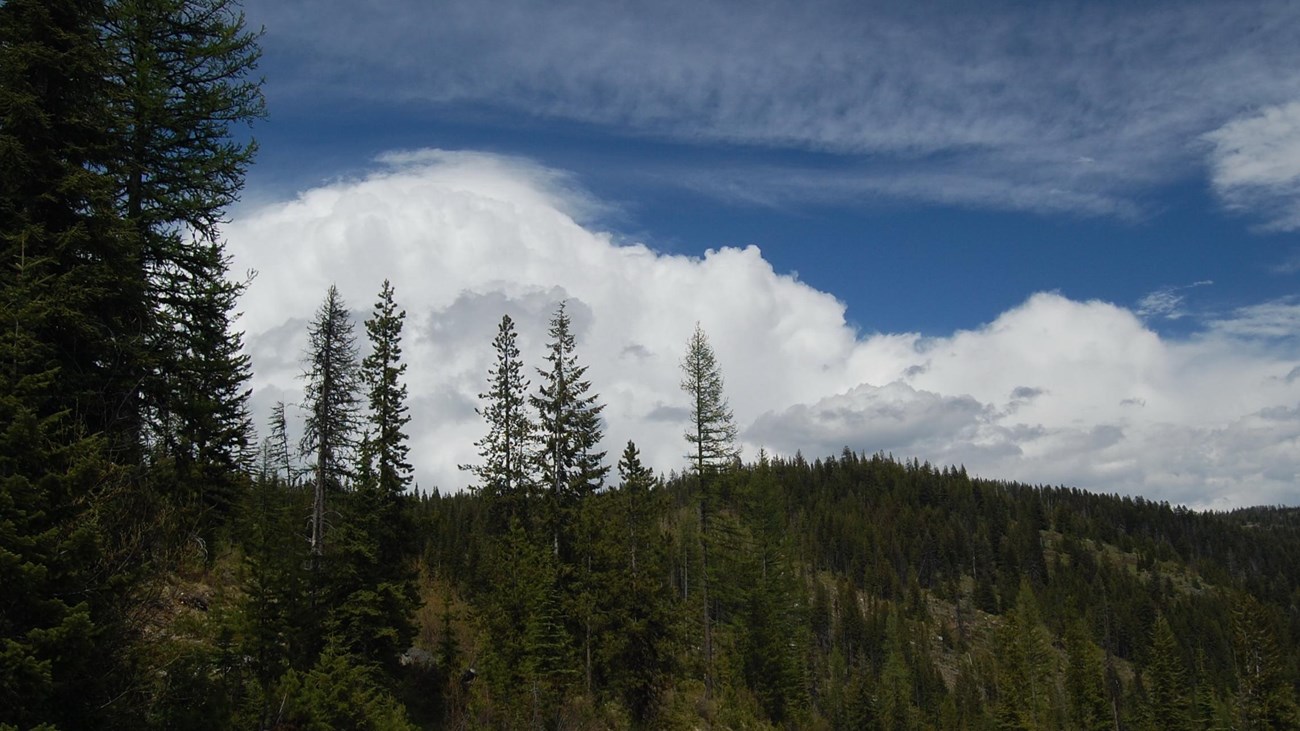
The Road to the Buffalo
The Lolo Trail extended from Weippe Prairie through the mountains to Lolo Pass on the Idaho-Montana border. It was the primary route over the Bitterroot Mountains into western Montana and the northern Great Plains — a trail that offered hunting, fishing, gathering, and trade opportunities. A Nez Perce legend tells of a young boy lost in these mountains who met Hah-hahts, the grizzly bear, and learned of the land's bounty. Before releasing him, the bear told him to return to his people and teach them of the great land, the food provided, and the trail that would take them across the mountains.
Lewis and Clark
In September 1805, the Lewis and Clark Expedition struggled over the Lolo Trail, led by a Lemhi Shoshone guide. What they expected to take five days turned into an ordeal of eleven days over snow-covered ridges. Severe storms, scarce game, and harsh conditions forced them to eat some of their horses and emergency rations. They emerged from the mountains on September 20, exhausted and hungry.
The Flight of 1877
On July 16, 1877, after four weeks of fighting in Idaho, the non-treaty bands of nimíipuu set out on the Lolo Trail, hoping to find safety in Montana. They did not know if they would ever return to the land where they were born, where they played as children, where their grandparents were buried.
On July 25, the nimíipuu reached Lolo Hot Springs well ahead of the army. On July 26, they met with Captain Rawn at Fort Fizzle to make their intentions clear: they had no wish to molest settlers or property, they wanted to travel in peace, they would not surrender their horses and arms, and they would not return to Idaho. Captain Rawn had clear orders to stop them, but on July 28, when the nimíipuu warriors climbed a steep ravine and bypassed his barricade, the previously unnamed fortification became known as "Fort Fizzle."
Meanwhile, General Howard moved slowly across the trail, always weeks behind the fleeing people. By the time he reached Lolo Hot Springs on August 6, the nimíipuu had crossed the mountains and disappeared into Montana — and beyond.