White Bird Battlefield History
On June 17, 1877, in White Bird Canyon, young nimíipuu warriors met a U.S. Army cavalry unit in the first battle of the Nez Perce Flight. In less than thirty minutes, the warriors turned back a force that outnumbered them, killing thirty-four soldiers.
The Days Before
On June 13 and 14, young warriors led by Wáalaytic (Shore Crossing), Sáapsis 'ilp'ílp (Red Moccasin Tops), and Wetyétmes wehéyqt (Swan Necklace) raided homesteads on the Salmon River, killing settlers in retaliation for past injustices. Realizing that army retaliation would come swiftly, the Nez Perce bands gathered at Tolo Lake moved to Lahmotta, near White Bird, seeking better ground to make a stand.
June 17, Before Dawn
Captain David Perry led approximately 106 cavalry troops and eleven civilian volunteers from Fort Lapwai toward White Bird. By early morning, Nez Perce scouts kept watch on his column as it descended the canyon. Close to seventy warriors gathered to meet him.
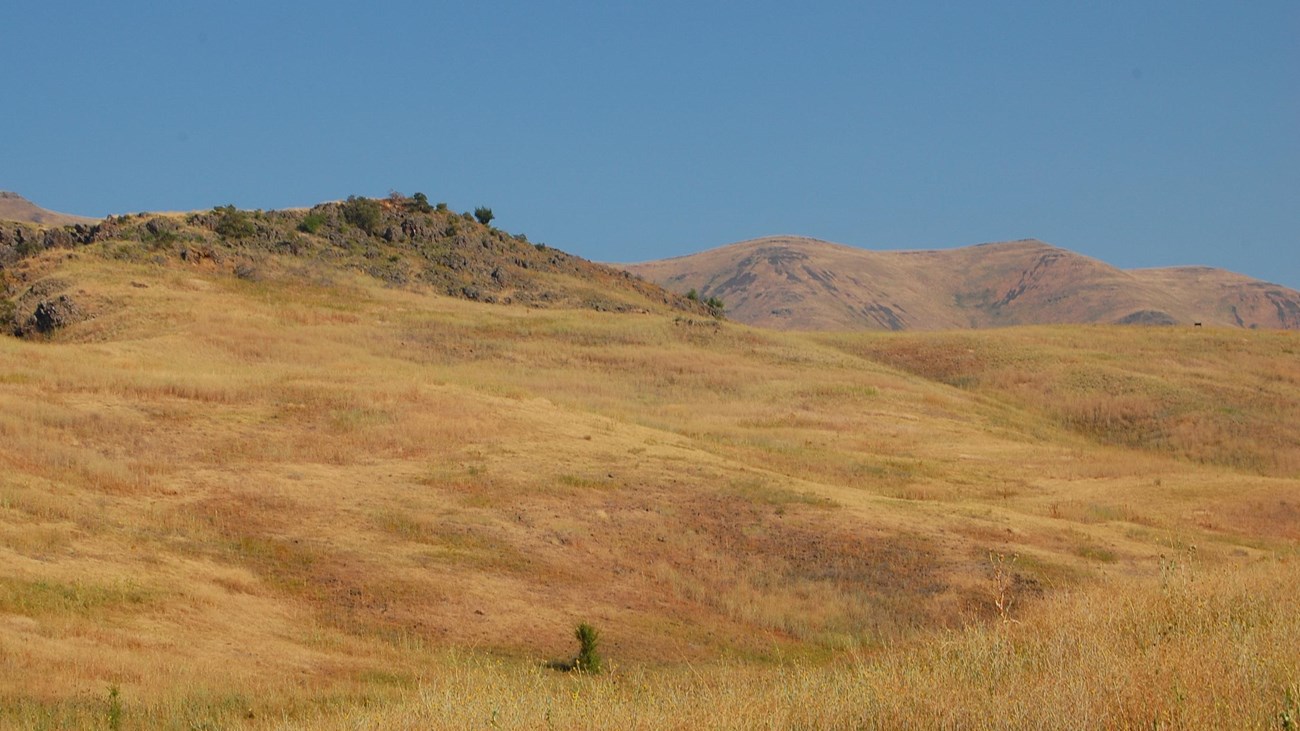
Ollokot, Chief Joseph's younger brother, and Two Moons positioned small groups of warriors along the bluffs above the canyon road. Waist-high grass covered the hillsides, offering concealment as they prepared for battle. The soldiers had no idea what awaited them in the canyon below.
The Moment of Decision
Lieutenant Edward Theller led a scouting party ahead of Perry's main column. As Theller approached the ridge and spotted the nimíipuu encampment, he saw something unexpected: a peace party of six men led by Wettiwetti Howlis (Vicious Weasel) approached under a white flag. The moment hung in balance — would it be negotiation or war?
A civilian volunteer named Arthur Chapman, for reasons that history cannot fully explain, opened fire on the peace party. In an instant, the decision was made. John Jones, Theller's trumpeter, fell dead. The battle had begun.
The Battle Unfolds
Hearing the first shots, Perry ordered his men to dismount and form a skirmish line as they advanced. But the nimíipuu warriors were ready. They poured fire from the heavily wooded creek and the bluffs above, driving the civilian volunteers back in retreat. The volunteers' withdrawal demoralized the soldiers — some troops misinterpreted the retreat as an order and began to fall back themselves.
With one trumpeter dead and another having lost his trumpet on the trail down, Perry could not communicate with his scattered command. As Company F deployed across the ridge slopes on foot, they found themselves in a precarious position, flanked by warriors and taking heavy fire.
Thirty Minutes to Victory
Captain Joel Trimble's Company H took position on the far right, but a substantial gap of perhaps 200 yards separated it from Company F. In a bold move, Nez Perce warriors stampeded horses up the hillside toward Trimble's position. Three warriors in conspicuous red coats — Sarsis Ilppilp, Wahlitis, and Tipyahlahnah Kapskaps — rode among the stampede, disrupting the soldiers' attempts to hold their line.
Within thirty minutes, Perry's situation had become untenable. Facing wounded and killed soldiers, lacking communication with his troops, and unable to stem the nimíipuu advance, Perry ordered a retreat. His command split into two groups as soldiers scrambled back up the steep canyon walls. Lieutenant Theller and seven men became trapped in a ravine and were killed. Others made their way back to the canyon rim and continued their retreat across the Camas Prairie.
The Aftermath
Perry left behind thirty-four dead soldiers. Two additional soldiers and two volunteers were wounded. The Nez Perce fighters sustained three wounded but no deaths. They retrieved approximately sixty-three weapons and ammunition from the battlefield.
Realizing the gravity of what had happened, the Nez Perce bands broke camp and crossed the Salmon River. General Howard was gathering his forces for a pursuit that would continue for over four months, across more than 1,170 miles, through four different states.