Cottonwood Skirmish Site History
After the battle at White Bird, the nimíipuu crossed the Salmon River and regrouped on the Camas Prairie. It was here, in early July 1877, that they skirmished with the U.S. Army and local volunteers, and where the flight's intensity intensified.
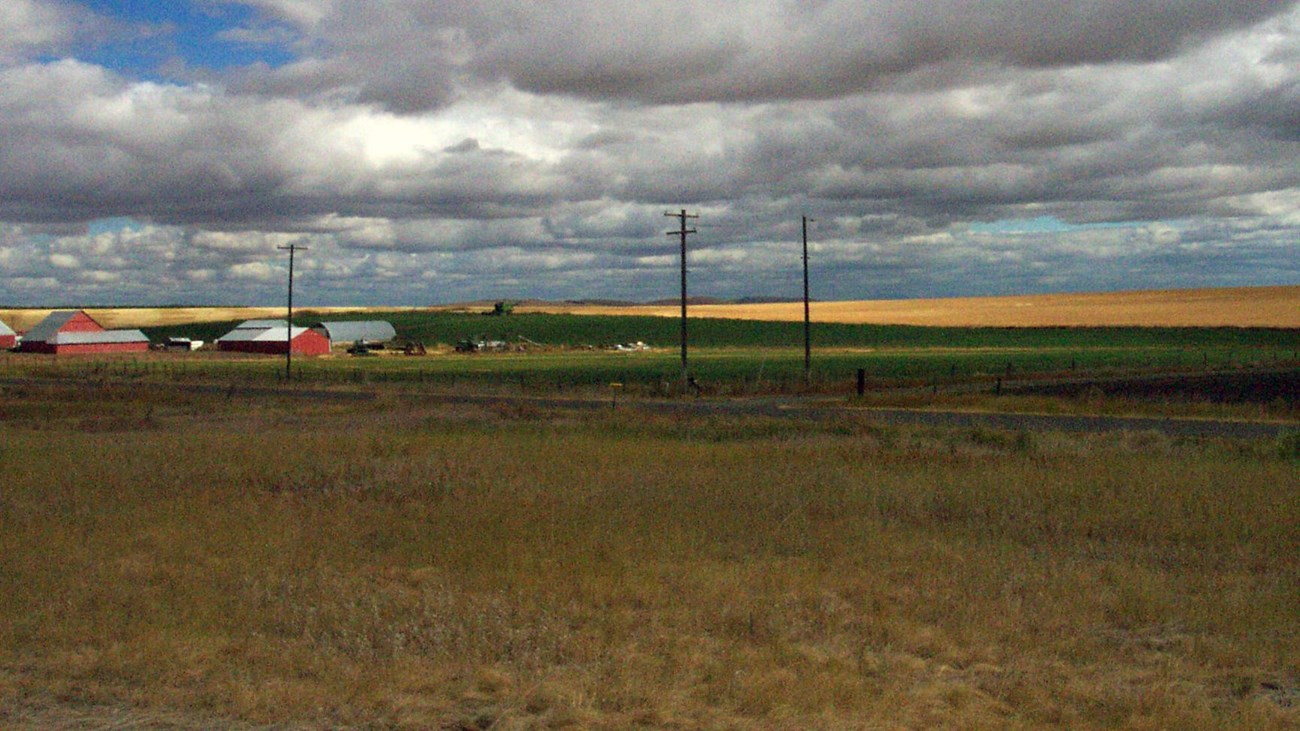
The Skirmishes Begin
After crossing the Salmon River below Whitebird, the nimíipuu crossed again and appeared on the Camas Prairie. As they moved across the prairie, skirmishes erupted near Cottonwood on July 3, 1877. Captain Stephen G. Whipple, commanding two companies of the First Cavalry, sent two civilian scouts west of Cottonwood to investigate the nimíipuu movements. The scouts encountered warriors, and one was killed. The other returned with urgent news of the contact.
The Death of Lieutenant Rains
In response, Whipple sent a detachment of ten men under the command of Lt. Sevier M. Rains to investigate further. Rains' small group was surprised by nimíipuu warriors in a skillfully executed ambush. All ten soldiers were killed. It was a blow to the army's pride and a boost to the warriors' confidence that they could defeat trained cavalry.
The Battle at Norton Ranch
Whipple received reinforcements from Fort Lapwai and dug in near Norton Ranch, about three miles from Cottonwood. Nimíipuu warriors attacked, and for a time the soldiers held their ground. The warriors eventually withdrew, but the battle had succeeded in delaying the army and allowing the main body of nimíipuu to regroup.
The Raid on the Volunteers
On July 5, as the nimíipuu crossed the Camas Prairie to gain access to the ancient trail over the Bitterroot Mountains, a party of seventeen armed civilian volunteers came across the warriors. The nimíipuu quickly surrounded and overwhelmed them, allowing the main body to escape. For General Howard, these encounters were frustrating—the nimíipuu repeatedly frustrated his pursuit plans and created doubt in the popular press about his ability to end the conflict quickly.